I sometimes think about what my life would have looked like if I hadn’t learned other languages. Not just in the abstract, “languages are useful” kind of way, but in a deep, vivid, can’t-imagine-who-I’d-be-without-them way. Because, honestly, without languages, so many of the experiences that have shaped me wouldn’t have happened at all.
I would never have wandered around northern Portugal, hopping between breathtaking coastal towns and mountain villages, feeling not like a tourist, but like a guest – sometimes even like an honorary local. I wouldn’t have known the thrill of sitting down at a café in a new town and striking up a conversation with the people around me. I wouldn’t have had the same warmth in my memories of walking into bakeries, markets, train stations, and hearing not just what people were saying, but understanding it – and being part of it.
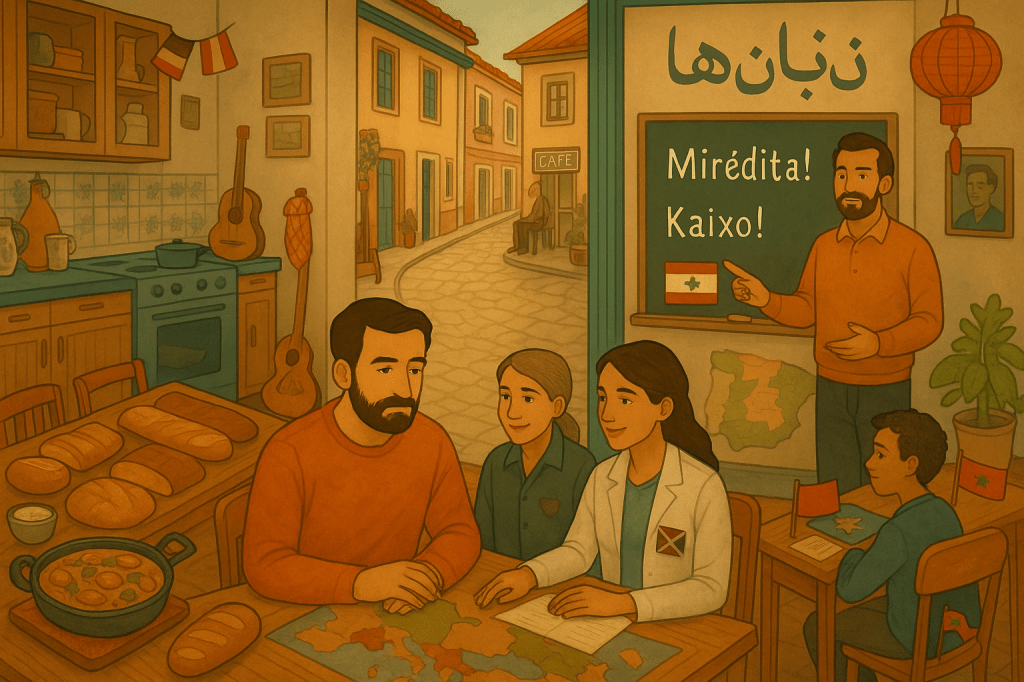
I would never have shared a flat in Spain with French and German students. It sounds like the beginning of a sitcom – mismatched cultures, different routines, chaos in the kitchen – but it was real life. Real dinners, real late-night talks, real friendships. We came from different places and spoke different languages, but what made that experience work – and made it so special – was the fact that we could connect in ways that went beyond English. We shared food, stories and music, and slowly adopted bits of each other’s habits, expressions, and even ways of thinking. That shared space demonstrated to me how languages aren’t just a way to communicate – they’re a way to live alongside others with more understanding and curiosity.
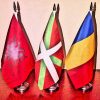
I would never have taught Albanian or Basque. That might sound like an odd sentence to write, especially since these aren’t exactly languages you stumble across in every corner of the world. But that’s part of what made the experience so meaningful. Learning and then teaching these languages took me far beyond the mainstream, into cultures and communities that most people don’t get to engage with on that level. I didn’t just study grammar books or listen to audio recordings—I learned from people, places and stories. And then I got to pass that on. Teaching these languages (and others) give me a deeper respect for the people who speak them, their histories, their resilience, and their pride in their identities. It reminds me that every language is a world in itself, and when you learn one, you get invited into that world.
I would never have interpreted Romanian for asylum seekers and hospital patients. This one changed me. It’s one thing to learn a language for travel or study or fun – and those are all great reasons – but using language to help someone feel less alone in a moment of vulnerability is something else entirely. I remember the nervousness in people’s eyes as they tried to explain their symptoms or their stories, and how everything shifted when they realised I understood them. Being able to convey, “I’ve got you. I can help make sure they understand what you’re going through,” is incredibly powerful. It’s not about perfect words or fancy expressions. It’s about presence. About trust. Language, in those moments, becomes a lifeline.
And then there are the paths I began to explore a little later in life – Farsi and Chinese. These languages have opened up entirely new ways of seeing and understanding the world. They’ve introduced me to poetry, philosophies and perspectives that are unlike anything I’ve encountered before. Every phrase, every conversation, has been a gateway – leading not just to new vocabulary, but to new culture, new beliefs and new ways of thinking. They’ve brought unexpected beauty and depth into my life in ways I could never have fully foreseen.
If all of this sounds a little unreal, I get it. Before I started learning languages, I wouldn’t have believed any of this either. But that’s exactly the point. Languages have a way of opening doors you didn’t even know were there. They don’t just broaden your horizons – they shift them entirely. You start off thinking you’re learning a few phrases for a trip, or a new job, or just out of curiosity. And then, before you know it, you’re having dinner in a farmhouse in rural Portugal, or helping someone through a medical appointment, or listening to a Chinese friend explain the meaning behind a character you’ve just learned.
Languages have taught me to pay attention – to listen closely, not just to what people say, but how they say it. They’ve taught me to adapt, to laugh at my mistakes, to be okay with not always getting things right the first time. They’ve made me more empathetic, because understanding someone else’s language often leads to understanding their fears, their joys, their humour and their history.
They’ve also made me braver. Because every conversation in a new language is a leap of faith. You never know exactly how it’s going to go, but you go for it anyway. You learn to navigate uncertainty with curiosity instead of fear. And that mindset seeps into other parts of your life too. Suddenly you’re more open to new experiences, new people, new ways of thinking. Suddenly, the world feels a little more accessible.
And here’s the thing: you don’t have to become an expert to experience all this. You don’t need a perfect accent or flawlessly-crafted sentences. Some of my most meaningful moments happened with just enough language to connect. Enough to ask a question, to listen to the answer, to be present with someone in a shared human moment.
So if you’ve ever thought about learning a language – any language – I want to encourage you to give it a try. Not just because it’s “useful” or “good for your brain” (though both those things are true). But because it could change your life in ways you can’t predict. It might take you to unexpected places. It might introduce you to people who become lifelong friends. It might help you help someone else. It might give you stories you’ll remember forever.
You don’t have to go far or spend years studying to feel the magic of it. Even a few words can open doors. A few expressions can show someone that you care enough to meet them halfway. And sometimes, that’s all it takes to make something beautiful happen – a connection, a kindness, a shared laugh that wouldn’t have happened otherwise.
Languages have shaped the way I see the world. They’ve brought me joy, challenge, purpose and connection. They’ve pulled me out of my comfort zone and into spaces I never imagined I’d be. And I honestly believe they can do something just as powerful for you.

 Albaro Languages