
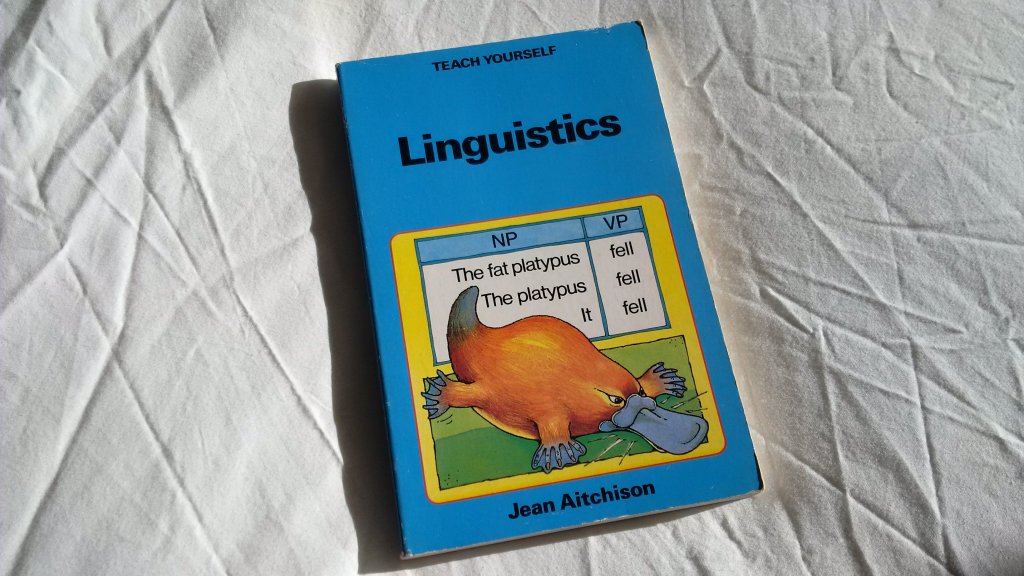
As with so many of my lifelong passions and interests, my first encounter with linguistics came from a book. It was back in the days when my parents would take me to the library once a week to pick out a book and I came across ‘Teach Yourself Linguistics’ by Jean Aitchison. One chapter in, and I was hooked. Why? Well, apart from the fact that it was the first (and basically only) scientific subject that fascinated me, amidst the vast range of academic disciplines, linguistics stands out as a captivating and multifaceted field that has the power to engage people from all walks of life. From its intricate exploration of language structures to its wide-ranging applications in various domains, linguistics unveils a world of fascination and relevance. It possesses the unique ability to bridge the gaps between diverse interests, which I would argue makes it an ideal addition to any school curriculum.
Linguistics, at its core, is the scientific study of language. It delves into the intricacies of how languages are structured, how they evolve and how they shape human communication. What makes linguistics particularly appealing is its ability to cater to a broad spectrum of interests. Whether you’re fascinated by the diversity of languages, intrigued by the nuances of communication or drawn to the application of language patterns, linguistics has something to offer.
Linguistics extends its relevance far beyond the confines of linguists and language enthusiasts. For those interested in exploring other languages, linguistics serves as a gateway to understanding the unique features and intricacies of diverse linguistic systems. The comparative analysis of languages not only enriches cultural appreciation but also enhances cognitive flexibility by exposing students to different ways of expressing ideas.
Besides that, for those fascinated by language in general, linguistics provides a lens through which you can unravel the mysteries of human communication. From syntax and semantics to phonetics and pragmatics, linguistics offers a comprehensive toolkit for dissecting the mechanics of language, fostering a deeper comprehension of the very essence of human interaction.
Linguistics transcends the confines of academic inquiry, revealing its influence in unexpected realms of everyday life. The art of persuasion in advertising, for instance, relies heavily on linguistic techniques. Understanding how language can shape perceptions and influence behaviour becomes a powerful skill for those venturing into marketing and design.
In the field of technology, artificial intelligence and computing benefit significantly from linguistic research and insights. Natural language processing (NLP) is a prime example, where machines are trained to understand and generate human-like language. By grasping the intricacies of linguistic structures, you can contribute to the development of more intuitive and effective AI systems.
Perhaps unsurprisingly, many people (me included!) find themselves excelling in linguistics when other sciences may have eluded them. Linguistics, with its blend of scientific rigour and creativity, provides a unique space for those who appreciate structured analysis yet crave the flexibility (human-inspired quirks) of language expression. For many, it becomes the science they were always good at, but never had the chance to pursue academically.
So, including linguistics in the school curriculum holds immense value, not only for those with an inherent interest in language but for everyone seeking a well-rounded education. By introducing linguistics early on, students develop a fundamental understanding of the building blocks of communication, setting them up with a skill set applicable across various disciplines.
Linguistics encourages critical thinking skills as students analyse language structures and patterns. It embeds a logical and systematic approach to problem-solving, laying a solid foundation for success in fields that require analytical reasoning. Plus, linguistic studies promote cultural awareness and sensitivity by exposing students to the rich tapestry of languages spoken globally.
The interdisciplinary nature of linguistics makes it a powerful catalyst for boosting skills and interest in other subjects. In mathematics, the logical structures inherent in linguistic analysis mirror the precision required in mathematical reasoning. In science, linguistics contributes to understanding cognitive processes and the neurological and physiological aspects of language.
What’s more, linguistics sparks an interest in literature and the arts by unveiling the scope and versatility of linguistic expression. Exploring the subtleties of language enhances creativity and communication skills, which are invaluable in fields ranging from literature and journalism to creative industries like film and design.
In short, linguistics is a captivating and multifaceted discipline with wide applications that extend far beyond the realm of language enthusiasts. Its universal appeal lies in its ability to cater to a diverse range of interests, from linguaphiles to those intrigued by the applications of linguistic patterns. By integrating linguistics into the school curriculum, we not only provide students with a comprehensive understanding of language but also equip them with skills and insights that transcend disciplinary boundaries. In a world where effective communication and interdisciplinary collaboration are increasingly vital, linguistics has something of value to offer everyone.

 Albaro Languages